.svg?sfvrsn=be606e78_3)
- Home
- Article
Leader Briefs Sponsored by Ansell
By: Outpatient Surgery Editors
Published: 2/24/2025
Share:
The Road to Safety
How Should Leaders Navigate SSI Challenges?

The safety of patients and staff is an all-encompassing task that falls to the entire OR team throughout the health care ecosystem. Still, it is often the leaders of OR teams who are critical in spearheading best practices and navigating challenges. Leaders are responsible for the big picture and the smallest details that make up the fabric of day-to-day surgeries in ambulatory surgery centers and hospital outpatient departments. They are at the frontline of infection prevention to ensure the safety of patients and the care team.
Collaborating with a company that understands workplace risk in health care offers a much-needed partnership for leaders. Ansell’s vision statement is “Leading the World to a Safer Future” with a mission of “Staying Two Steps Ahead of Workplace Risk. Everywhere.” These are sentiments that certainly resonate with leaders in surgical environments.
For a deeper look at infection prevention, Outpatient Surgery Magazine spoke to two experts to gauge the state of the industry and learn what forward-looking trends would best prepare leaders for the challenges of keeping patients and care teams safe throughout the surgical journey — Maureen Spencer, Med, BSN, RN, CIC, FAPIC, Independent Infection Prevention Consultant, and Peter Graves, BSN, RN, CNOR, Independent Perioperative Infection Prevention Consultant, who offered the following insights.
Q: What are the most important infection prevention trends perioperative leaders should be aware of as they focus on 2025 and beyond?
- To gain buy-in for new infection prevention initiatives, involve all key stakeholders from the beginning to shape practical and effective initiatives.
- Clearly explain the rationale behind the initiative, emphasizing patient safety and outcomes, and support your case with data and evidence.
- Offer comprehensive training to ensure everyone understands the initiative and how to implement it, addressing concerns proactively.
- Empower influential team members to advocate for the initiative as they can persuade peers and foster a culture of compliance.
- Share examples of successful implementations from your facility, such as the use of the 7S bundle, to highlight improvements in patient care, outcomes and efficiency.
- Continuously monitor the initiative and provide regular feedback, recognizing compliance and addressing issues promptly.
- Encourage open communication and collaboration among all team members to create an environment where everyone feels valued and heard.
These strategies ensure successful implementation and adherence to infection prevention protocols.
Q: What are the key elements of a good surgical services infection prevention program? What are the “must haves”?
- To ensure effective infection prevention in surgical services, organizations should commit adequate resources, endorse infection prevention measures and promote a safety-first culture through strong leadership support.
- Engage all healthcare providers, infection preventionists, environmental services and administrative staff in developing and executing a comprehensive strategy.
- Employ qualified infection preventionists to oversee surveillance, manage activities and provide ongoing education.
- Develop, educate and enforce evidence-based protocols for hand hygiene, sterilization, scope and instrument care and disinfection.
- Provide regular staff training and implement robust monitoring systems to track infection rates and ensure compliance with evidence-based best practices and published guidelines.
- Conducting observational process audits is essential to ensuring compliance with the facility’s policies and procedures, which are developed per established guidelines.
- Communicate results to all surgical services staff to maintain transparency and continuous improvement.
These steps are crucial for safeguarding patient and staff health in healthcare settings.
Q: As a leader, how do you get buy-in from the entire surgical team, including surgeons, for protocols you may develop for your facility based on guidelines and current thinking?
- Clearly explain the rationale behind the initiative, emphasizing patient safety and outcomes, and support your case with the current guideline recommendations. Gather evidence-based research for recommended practices or procedure changes, especially for surgeon buy-in.
- Offer comprehensive training to ensure everyone understands the initiative and how to implement it, addressing concerns proactively. Unit-based champions, both staff and surgeon members, can assist in implementing practices and protocols.
- By empowering influential team members to advocate for the initiative, they can persuade peers and foster a culture of compliance.
- Share examples of successful implementations from other departments, and other healthcare systems, to highlight improvements in patient outcomes and efficiency.
- Continuously monitor the initiative and provide regular feedback, recognizing compliance and addressing issues promptly.
- Encourage open communication and collaboration among all team members to create an environment where everyone feels valued and heard.
Leaders should work towards successful implementation of these strategies and adhere to infection prevention guidelines.
5 Top Leadership Tips
Riding the Wave of Change
Look ahead for long-term solutions to an ever-changing environment. While your mindset may already prepare you for change, perhaps your staff is not there. They may prefer the status quo and will get thrown when too many changes come their way. Be aware that everything new will feel different. People need time to absorb and adjust. Open communication is key, as always, when riding the wave of change with your team.
Pay Attention to Trends
Leaders juggle so many responsibilities, including their own professional development. But while you may be pursuing certifications related to “hard” aspects of your job, have you been brushing up on the “softer” area of your leadership skills? New leadership trends are emerging in response to rapidly evolving business conditions. Take a few minutes each week to see exactly what experts in leadership are discussing. You might find some relevant ideas to apply to your own leadership strategy.
Are You Getting the Most Out of Your Data?
Many surgical facilities are drowning in the massive amount of data they routinely collect from patients, payors, charting, equipment and more. While collecting data is worthwhile, the ability to analyze that data and use the results to make informed, evidence-based changes in clinical and operational strategies is the next level — and could ultimately lead to competitive advantages. If you haven’t already done so, get your hands around your data and become data-literate.
Build a Leadership Pipeline
As an experienced leader, how are you encouraging younger nurses to transition into leadership roles? Choosing the right time and the right place to have those conversations with individuals who seem interested can be tricky. Instead of a formal sit-down, use casual conversations and daily collaboration time to probe an individual’s strengths and personal desires. Keeping tabs on potential leaders will help fill gaps when they come up.
Take Your Team’s Temperature
Burnout has always been part of the healthcare profession, but today it has reached new heights. What can you do as a leader? Most important is to be aware of the stress and emotional burnout you see in individual staff members and acknowledge it — you know them best. Be sure to encourage work-life balance and be flexible and fair with scheduling. Watch for signs of burnout and make sure your organization can offer support programs.
For more Leadership Tips, click HERE.
Q: How important is radiation safety in the operating room and why?
- All surgical staff must prioritize radiation safety to protect themselves and their patients from ionizing radiation.
- Always wear clean lead aprons, thyroid collars, head covers and lead glasses.
- Scrubbed personnel should use radiation attenuation gloves to protect their hands, which are most exposed to scattered radiation.
- Maintain a safe distance from radiation sources and use shielding devices like lead screens, avoiding reaching into the beam even when wearing protective gloves.
- Minimize your time near any radiation source by planning procedures efficiently.
- Use dosimeters to measure radiation exposure and ensure it stays within safe limits.
- Engage in regular training and stay updated on your facility’s latest radiation safety protocols and guidelines.
By implementing these practices, surgical staff can significantly reduce the risks associated with radiation exposure in the operating room.
Q: What role does education play in infection prevention and how can perioperative leaders utilize it successfully for their teams?
- Education is the fundamental cornerstone for any surgical infection prevention program. Leaders must equip their OR staff with the necessary knowledge and skills to be successful.
- Perioperative leaders should schedule regular training sessions to reinforce infection prevention protocols and the latest guidelines, validating staff compliance.
- Foster a learning culture by promoting team dialogue and hosting interactive workshops focused on infection control. Use simulation scenarios to allow staff to practice and master infection prevention measures in a safe, realistic environment.
- Offer accessible educational materials, such as guidelines, checklists and videos, to support learning.
- Regularly evaluate staff performance and provide constructive feedback to highlight areas for improvement and celebrate successes.
By prioritizing these strategies, perioperative leaders can enhance their teams’ skills and awareness, leading to improved patient outcomes and reduced surgical site infections.

Q: What does a partnership with Ansell look like as leaders tackle SSI challenges in the coming months and years?
- Partnering with Ansell enables healthcare leaders to proactively address surgical site infection (SSI) risks through the evaluation and adoption of quality products and peer-reviewed educational resources that focus on evidence-based best practices. Key aspects of this partnership include using a portfolio of protective devices from SANDEL® Medical Solutions, which focus on sharps safety, fluid management and OR turnover efficiency to reduce SSI risks.
The AnsellCARES program offers educational resources, including webinars, clinical evidence summaries and in-service briefs, to keep surgical teams informed about the latest infection prevention and safety strategies. Ansell also promotes best practices such as double-gloving and routine glove changes during surgical procedures to minimize exposure risks. By collaborating with Ansell, healthcare leaders can access a comprehensive suite of tools and knowledge designed to effectively tackle SSI challenges, improve patient outcomes and provide peace of mind.
For more information about the AnsellCARES Webinar on preventing SSI risks using the 7S Bundle Approach go here and here.
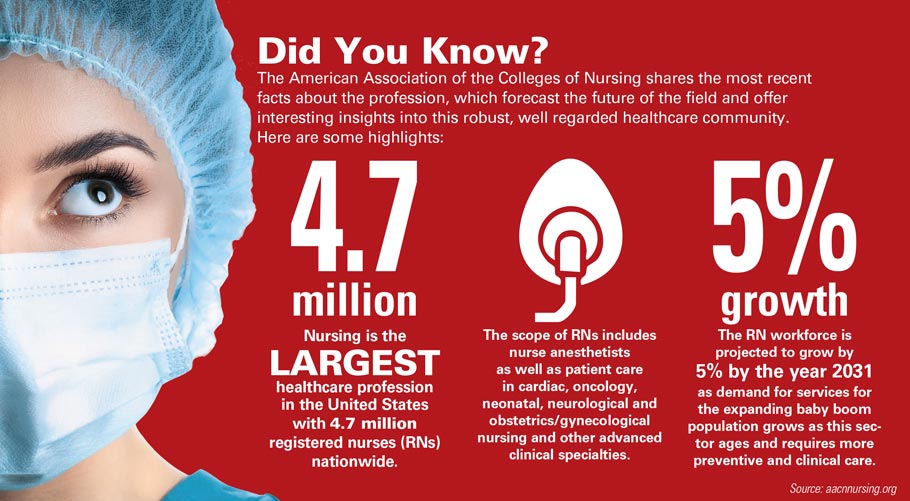
Leadership in Nursing: Why it Matters

Nursing is one profession that can never be boring as shifts in the healthcare landscape are constantly changing the environment. During the pandemic, for example, nurses had to pivot in a difficult environment that tested both their skills and adaptability over the course of several years. Leaders emerged from this crucible and are today the leaders of tomorrow.
Nurse leaders don’t always have the titles that go with their responsibilities as those in the ambulatory surgery centers (ASCs) and hospital outpatient surgery departments (HOPDs) can attest. In fact, the smaller OR teams that practice in the same-day surgical environment usually wear many hats and carry the weight of maintaining patient safety, managing productivity and retaining and educating staff.
What makes a strong leader? The ability to manage under stress is key, and they should always lead by example. The best role model of a leader is one who exudes confidence and has both business and clinical experience. They can motivate younger team members to grow in the profession and reach their potential and take a hand in offering mentorship to build the community for the future.
Developing a strong skill set in interpersonal relations is critical for a leader to achieve as they work with the various individuals that make up the typical OR team. It’s important to communicate efficiently and effectively with all team members before, during and after procedures. They learn to “manage up” and how to collaborate and communicate with surgeons — all leading to successful outcomes for patients.
Why does developing leadership skills matter for the profession? Leaders are the glue that make the difference in a workplace culture. The influence of a successful leader can be felt throughout the business and can spell success or failure across the organization. OSM
.svg?sfvrsn=56b2f850_5)